Resources & Training
RESEARCH AND PERSONAL DEVELOPMENT MATERIALS

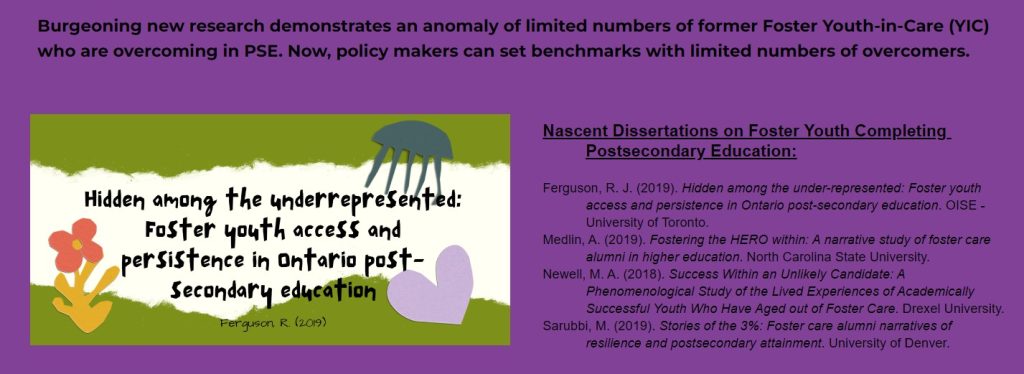
Success Factors of Foster Youth in Postsecondary Education
New Research on Success in Post-Secondary Education by Foster Care Alumni in Ontario indicate these are the top 5 Success Factors:
- Caring, Coaching Adults – caring teachers, professors, foster parents, social workers, church friends, and non-biological parents that demonstrated coaching was the top factor that participants credited for their success in higher education.
- Resistance – resistance to the negative stereotype of their biological parents, to their expectation of failure by others, to the stigma of insignificance, and to the feeling of “othering” (where you’re made to feel like you’re somebody other than the rest) was the 2nd reason why participants felt they were able to succeed. They didn’t accept the norm forecasted for FCA, but resisted it to succeed.
- Determination – in many cases, participants described how their determination to succeed was so important that they didn’t see any other option. Success was not optional, but mandatory if they were ever going to get past things.
- Experience – due to lack of family privilege and participants’ necessity to survive, they lacked the experience to understand what works and what doesn’t for higher education. However, when they finally got to experience a taste of post-secondary education, it helped them to understand there was a different life. Experiential learning in college and university was something participants indicated helped them to succeed within their programs and is something they wished more of.
- Career Clarity – the more FY participants obtained clarity on their career prospects through post-secondary education, the more it impacted their success. Even with less career planning support than their non-FY peers, the little they were able to obtain provided an immense amount of motivation to succeed.
…
Listen to the Podcast Recording with Wolfgang Vachon on “Discussions about Child and Youth Care”.
Child Welfare PAC – Advisory Member
Child Welfare PAC Canada is working with any post-secondary partners in Canada who wish to increase social mobility for current and former foster kids.
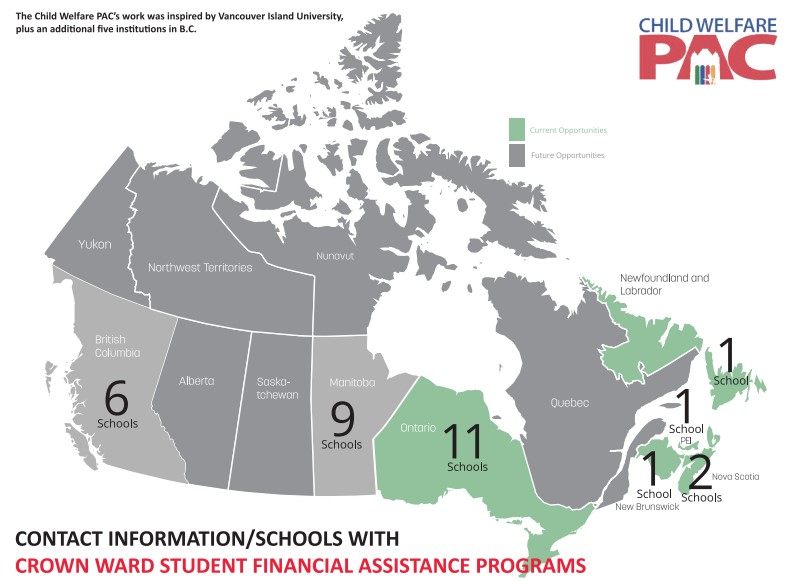
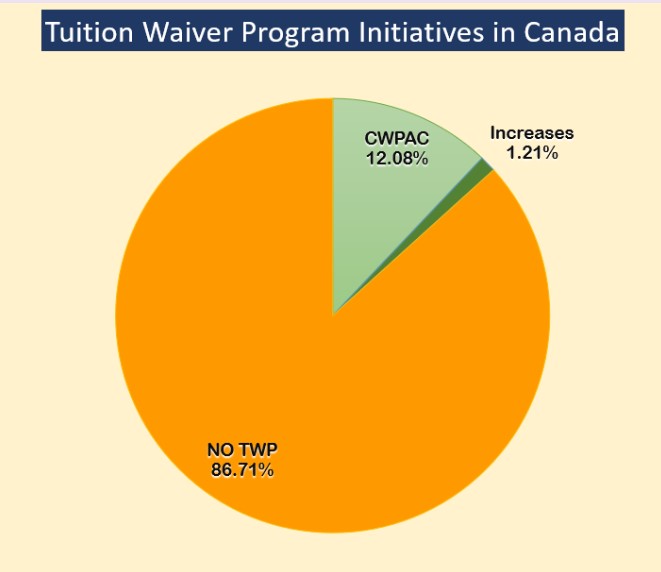
Finances are a significant, but not only, barrier to post-secondary studies faced by people raised in care. Inspired by existing programs in British Columbia and Manitoba, Child Welfare PAC has created 210+ tuition free opportunities at an additional 15 schools in 5 more provinces. Our end goal is similar opportunities at all post-secondary schools coast-to-coast.
For further details on initiatives, go to the Child Welfare PAC website.
Exploring former Youth-in/from-Care Learners in Canadian Postsecondary Education and Work-Integrated Learning – Panel Symposium
In October 2022, Sean coordinated a 2-Part symposium through CEWIL Canada with key researchers and leaders in Canada that are working on solutions for former Youth-In-Care.
Part 2: Explores actionable next steps and exemplars on how to best support former youth in care students.
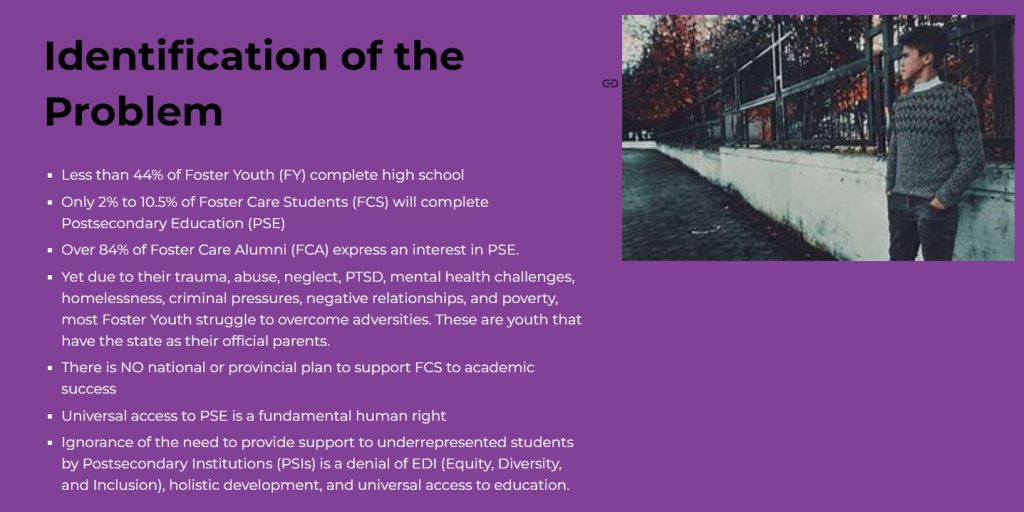
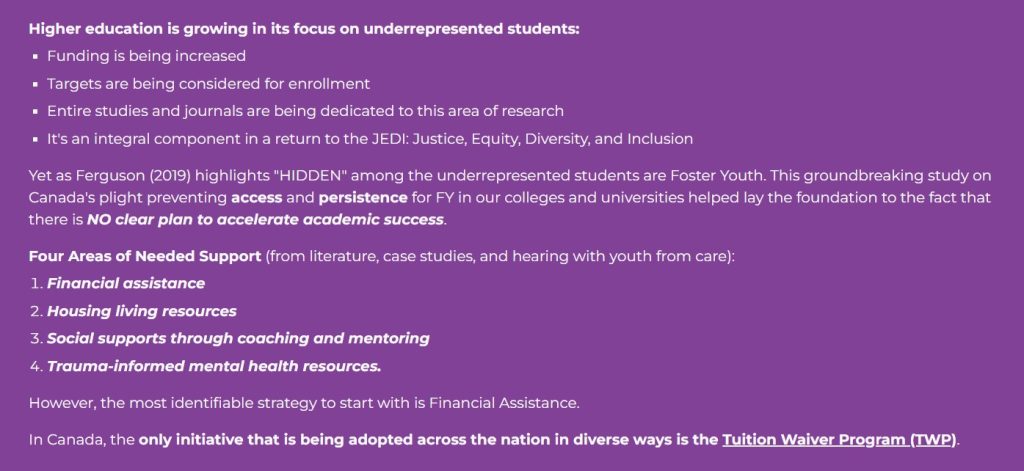
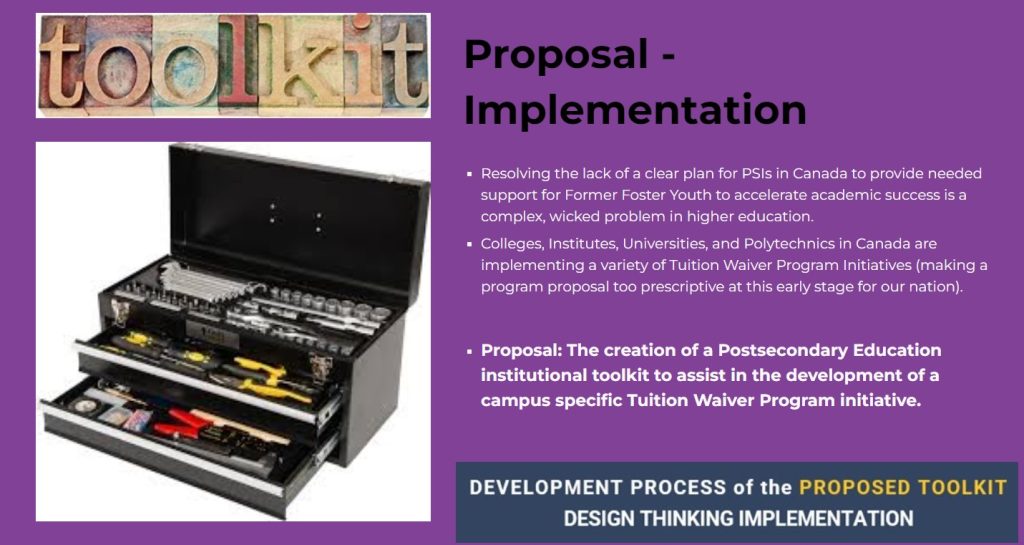
Supporting Former Foster Care Students in Postsecondary Education in Canada:
An Institutional Campus Support Proposal
A Master’s Capstone Thesis – Wilfrid Laurier University
Sean Elliott – Capstone Project (google.com)


…………………………………………………………………………..
Career Development and Career Planning Resources
Career development and planning involves steps and needs that can be explored by asking 4 questions:
- Who Am I? (strengths, interests, skills, experience, education, qualifications, values, needs, personality types)
- What Are The Options? (labour market information, career profiles and prospects)
- What Do I Need to Do? (career plan, exploration, research, and resources)
- How Can I Manage This for the Future? (what are the challenges that need to be overcome to build experience?)
Building a career plan cannot be done well without exploring all of these questions at some point. Look at your strengths and what you’re good at (i.e., Who am I?). Consider the Labour Market Information (i.e., What are the options?). Build a plan of action (i.e., what do I need to do?), and don’t forget to make the most of your career (i.e., How can I manage this for the future?).
Check out Career Coaches Corner to explore how Personality Dimensions can help identify your personality type and how that can relate to your career pursuits and working with others.
Additional details can be discovered by working with a qualified career consultant and through some proven assessments.
Educational Credentials
Let your learning lead you to the work.
What are some of the traditional types of credentials that have been proven over many years include:
- Diploma
- Apprenticeship
- Certificate (Entry Level) / Foundation
- Degree
- Graduate Certificate
- Honours Degree
- Master’s Degree
- PhD / Doctorate

Work-Integrated Learning
Work-Integrated Learning is a strong determinant of graduate employability.
It is one of the key strategies to identify candidates for the talent pipeline.
It cultivates pre-professional identity formation within student lives.
It brings career clarity to college and university students.
It integrates academic rigors with industry workplace factors.
CEWIL Canada
Check out the research and resources to see the impact experiential learning can make in your institution, program, or career at CEWIL Canada.
Continuity of Experiential and Educational Growth
The father of Experience and Education – John Dewey – launched many of educators into experiential educational theory in 1938. So, what does this mean for us today.
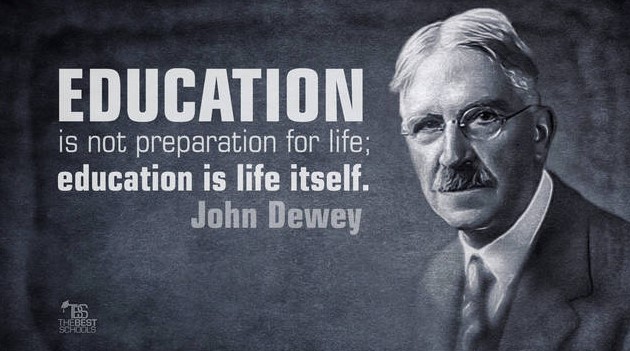
This is unpacked in a 12 minute, personal video presentation conducted by Sean at Continuity of Experiential and Educational Growth.
Theories about Learning and Development in Cooperative Education and Internships.
See the outline from Linn’s (2004) handbook for research in cooperative education and internships.
CEWIL Canada – Research Team
CEWIL’s Research Committee – What We Do:
As a member of CEWIL’s Research Committee, we aim to strengthen the educational sector in Canada.
To serve as an engine of CEWIL Canada in the development and execution of its strategic vision by:
- > developing and supporting a community of Canadian CEWIL researchers,
- > coordinating the national CEWIL research agenda through connections provincially, nationally and internationally,
- > serving as a resource hub for CEWIL research and researchers,
- > providing evidence-based research to inform Board and committee decisions for the CEWIL community, and
- > increasing the profile of CEWIL research through a variety of communication channels locally, nationally and internationally.
For more details on Research initiatives by CEWIL’s Research team, go to the website section on CEWIL Research & Resources.
Join Sean Elliott & Dr. Kathleen Clarke as they present at this year’s EWO (Experiential & Work-Integrated Learning Ontario) 2021 Conference. The focus on “The Road to Economic Recovery” is a great professional development virtual conference series.
Register at Conference 2021 – EWO.
Presentation:
WIL Within Ontario’s College Sector – Discovering the Impacts and Outcomes
Sean Elliott & Dr. Kathleen Clarke, CEWIL Canada
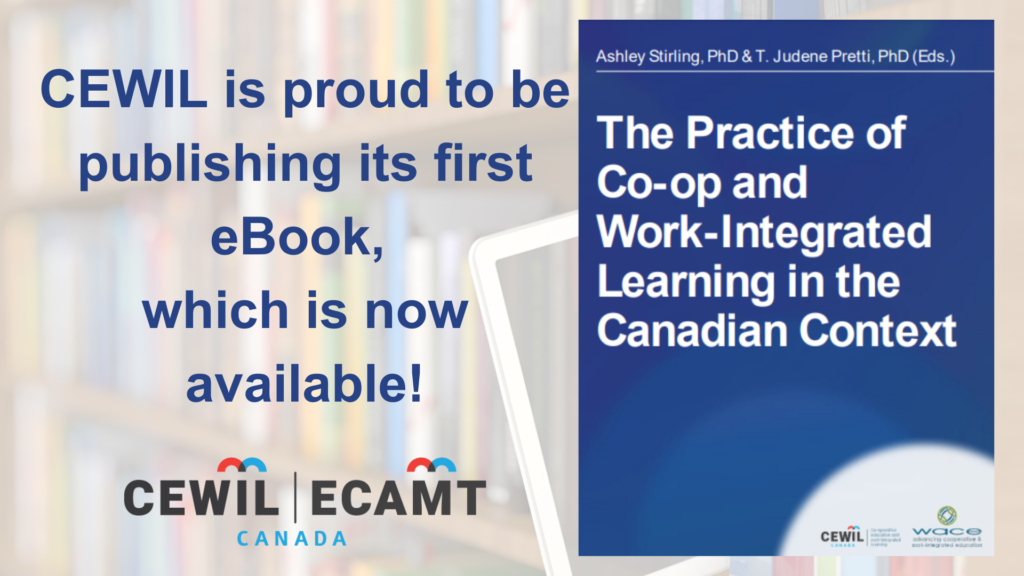
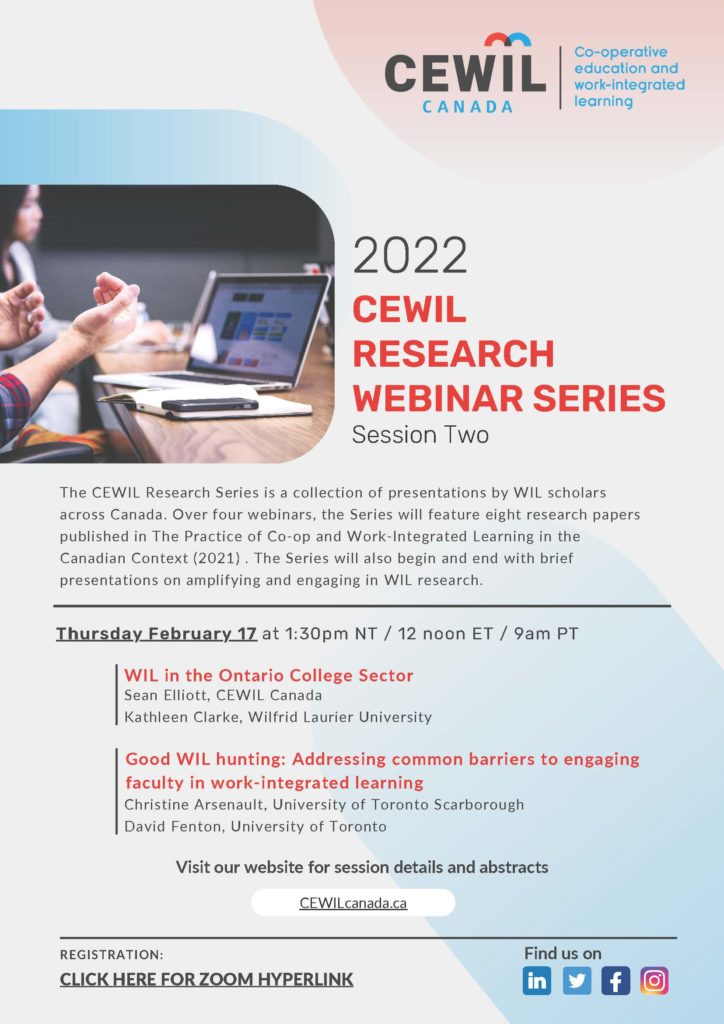
New Publication on Work-integrated learning within Ontario’s college sector (Chapter 14) in The Practice of Co-op and Work-Integrated Learning in the Canadian Context – released January 2022 through CEWIL Canada.
Presentation at CEWIL Canada’s Research Webinar Series on February 17, 2022 at 12:00 p.m. EST. Register Here.

Prepare/Enrich Marriage Facilitation
Whether it’s preparing for a marriage or needing time to enrich your relationship, go through a relationship assessment and set some goals through Sean’s coaching.
$ 50 / ASSESSMENT + $ 50 / SESSION
In the same way that you would prepare for a race or create architectural plans for a new building, why not take some time to prepare and build for successful relationships.
That is what Sean can do with couples through the tested Prepare and Enrich assessment materials. It helps couples to set important goals.
Weddings / Services
$ 400 (changes could affect the costs).
Officiant for Wedding Services. Book an introductory meeting to discuss your needs and wishes.

Many couples spend so much money, time, and planning on the special wedding day!
Photographer & Videographer?
Those memories are important. To hang on to those, get a great photographer or videographer. Connect with Dennis Colley – Invoke Media for details.
Preparation?
Imagine if we studied, trained, and prepared for marriage as we prepare for a career? What if there was a course on how to train for a marriage in the same way that there’s basic training for the military? Maybe there might be a significant difference in how society approaches the commitment to a wedding.

Not a Boot Camp
I am not proposing a boot camp for your wedding, but engaging in a couples’ assessment and a few sessions to work on some relationship goals could be the very thing that will help you get through future challenges and build the resilience in you for success!
Relationship Goal Setting
No one likes to get cavities out when our teeth reach the point of needed repair. Why not take preventative action by focusing on success factors for your future marriage days by doing some work to Prepare and Enrich your relationship?
How it Works
Relationship counselling tools are used to help identify a couple’s strengths and areas for growth within their relationship. They improve the facilitator’s ability to assist the couple in addressing issues within their relationship.

Prepare-Enrich premarital and marital counseling tools are based on the results of a comprehensive relationship questionnaire filled out by each person in the relationship.
The Prepare-Enrich inventory covers a number of areas that are important to healthy relationships. These include communication, conflict resolution, finances, sexuality, spirituality, couple closeness, parenting, and couple goals.
As a trained Prepare-Enrich facilitator, Sean interprets and guides the couple through the results detailed in the report. With the couple’s challenges identified, the counselor uses six relationship exercises to:
- > strengthen a couple’s skills in communication
- > identify and manage major challenges and stressors
- > resolving conflict using a Ten Step Model
- > explore strength and growth areas
- > Develop a more balanced relationship using the Couple and Family Maps
- > Understand personality differences and maximize teamwork
This takes place during three (or more) feedback sessions. The couple also receives a 24-page Couple Workbook to help them complete the exercises.
Enrich Your Marriage?
Or if you need some time to work on some goals in your existing marriage relationships, this assessment tool and goal setting time could be the refreshing step you need to take.
Contact Sean to discuss how you can start taking steps today.
…
Workshops
Personality Dimensions Team Building Facilitation
Businesses, boards, sales teams, clubs, classes, and non-profit organizations have benefitted from Sean’s facilitation of Personality Dimensions©, Strengths Discovery, Leadership Management, and Career Exploration/Planning workshops. For a sneak preview, check out the Career Coaches Corner tutorial.
$ 259 / HOUR
Mental Health and Well-Being – An Entire Community Approach
To better support and ensure full adoption of a balanced, integrative approach to mental health and well-being, Postsecondary Institutions can take the lead in demonstrating a campus community approach. Supported by CACUSS, CMHA, and the Mental Health Commission, it is proposed for entire institutional communities adopt a plan to build a framework for Mental Health and Well-Being. Working with a research team at Wilfrid Laurier University, we developed this infographic process to highlight how this process could be adopted.
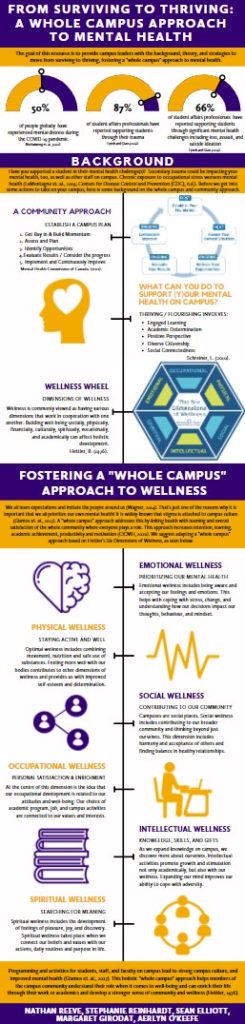
Go to this link for the full version:
From Surviving to Thriving: A Whole Campus Approach to Mental Health
Spirituality & Mental Well-Being
Research indicates that spirituality can have a positive impact upon mental well-being. Students are developing their sense of identity during their engagement in college and university (Fowler, 1981; Parks, 1986; Astin, Astin, & Lindholm, 2011). Yet, the increasing challenges of their academic program, career development, social pressures, nascent obligations of rent, groceries, and bills, and the volatile changing conditions of a global marketplace, brings further demands upon mental health. Resources are needed to better support the research that demonstrates the positive impact spirituality can have.
This additional web-based resource analysis endeavours to review 3 resources to consider how these fit into the background of why these are needed. After the critical analysis, further implications are provided to highlight why more web-based resources are needed to help strengthen the benefits students can experience in their mental well-being through spirituality.
Check out the
Spirituality and Mental Well-Being Resource Analysis.